Some very important facts about the use of a school blog: Blogs are read from bottom to top. Homework will be set for every week, no excuses will be accepted if you don't comply. If you decide to post a comment, remember to do it as " anonymous" and to include your name at the end. This blog means a big effort on my behalf, I do hope you enjoy it! Prof. Sosa D'Este

Wednesday, 27 May 2015

St. Gildas, Venerable Bede and The Anglo-Saxon Chronicles

In "De Excidio Britanniae", St. Gildas (sometimes called "The Wise"), a 6th century British monk, denounced in the most aggressive language possible, the terrible wickedness of his times. He is the only substantial source which survives from the time of the Anglo-Saxon conquest of Britain, and the best source prior to the much more impressive work of the Venerable Bede (who completed his "Ecclesiastical History of the English People" almost 200 years later, in 731).


 Could this monk be Bede? The picture, made 500 years after Bede lived, comes from a copy of Bede's book about the Christian church leader St Cuthbert.

The first page of Bede's History of the English Church and People. It begins with a decorated initial letter B (from 'Britain'). The book was made in the 800s.


 A page from the [C] text of the Anglo-Saxon Chronicle. This entry is for 871, a year of battles between Wessex and the Vikings.


The initial page of the Peterborough Chronicle.

Answer:
What did St. Gilda's write? When?
What did Bede write? When?
Who wrote The Anglo-Saxon Chronicles? When?
What is the conection between these works?

Their houses and everyday life

pottery

houses

food

soldiers

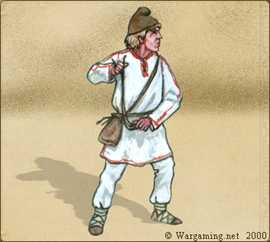
Write 1 "meaningful" sentence about each picture.
For eg. think :What does each picture say about the Saxons?

Wednesday, 20 May 2015

Anglo-Saxons! Please watch.


Watch and answer:
  1. Who were the Huscarls?
  2. What is a mercenary?
  3. Did the Saxons speak English? What was their language like?
  4. Mention two of their jobs.
  5. What was their most important value?
  6. Who attacked Britain?
  7. Why did the Normans win?

Anglo Saxon places in society

 1

 2

 3

 4

 5
Can you match the labels to the pictures?
(there is an extra label)
-thanes
-churls
-thralls
-witan
-fyrd
-reeves

Wednesday, 6 May 2015

Read carefully...

How did the Britons feel about the Romans leaving?
Why did they call the Saxons?
Would you have called them in their situation?
Do you think this is a real letter?

Where did the Saxons come from?

Look at the maps !


Can you mention the countries they are now?

Thursday, 23 April 2015

Domus, insulae or villa?

Can you name each house?
1

2

3

Roman buildings

Name each kind of building(1 to 4) and match them with the activities in the second group of pictures (A to E).

1

2

3

4

And now the activities...


A
B

C


D

E
Mind you, there's an extra picture in this last part!

Albanus, the first Christian martyr in Britain

A man called Alban, believed to have been a Romano-British citizen of the Roman town of Verulamium around the end of the 3rd century, gave shelter to an itinerant Christian priest, later called Amphibalus.
Impressed by what he heard Alban was converted to Christianity by him.
When a period of persecution, ordered by the Emperor, brought soldiers in search of the priest, Alban exchanged clothes with him allowing him to escape and it was Alban who was arrested in his place.
Standing trial and asked to prove his loyalty by making offerings to the Roman gods, Alban bravely declared his faith in "the true and living God who created all things". This statement condemned Alban to death. He was led out of the city, across the river and up a hillside where he was beheaded.


His deathplace became a Monastery which holds his shrine


Why was Albanus imprisoned?
How was he executed?
What do you think about this story?

Put the sentences in order (Click on image to enlarge)

 
Put the sentences in ORDER for part 1 and then do the same for Part 2

Roman gods (for next week)

Why was it good for Romans to have many gods?
Who was Neptune?
Who was Minerva?
Who was Cloacina?
Who was Mercury?
What does the phrase "your soul is at risk if you do not keep up sacrifices" mean?

Some useful vocabulary to understand the video:

· petty: small, unimportant
· theft: robbery, noun of thief
· waste away: to gradually become thin and weak, disintegrate
· navel: belly button, the scar of the umbilical cord
at 14:16

Some pictures connected to Boudicca

This statue of Boudicca stands beside the River Thames in London. It was made in 1897 and shows her in a chariot.
Colchester Castle (Essex) is built on the remains of the Roman temple which was destroyed.
  1. Who destroyed Colchester?
  2. Was it an important city? Why?


Way down to the Roman Temple Base


Maquette of Emperor Claudius Temple in Colchester

Tiberius Claudius Caesar Augustus Germanicus

CLAUDIUS
Born: BC10/08/01 Tiberius Claudius Drusus, at Lugdunum in Gallia Narbonensis.
Father: Drusus Nero Claudius [Germanicus] (younger son of Livia and stepson of Augustus).
Mother: Antonia Minor (younger daughter of Marcus Antonius and Octavia sister of Augustus).
Emperor: AD41/01/24 Tiberius Claudius Caesar Augustus Germanicus.
Died: AD54/10/13 in Rome, probably poisoned by a dish of mushrooms.

Read carefully and answer:

  1. In which modern country was Cladius born?
  2. How long did he live for?
  3. How long did he reign for?
  4. Why is he connected to England?